

On most rural farms, grain bins fade into the backdrop—steady, familiar, predictable. Until the moment they’re not. When grain stops flowing, frustration rises fast. It’s easy to step inside without thinking twice, and in an instant, a routine task becomes life-threatening.
Grain bin entrapments remain one of agriculture’s most unpredictable hazards, affecting farmers regardless of experience or caution. And when they happen, volunteer fire departments are the first to respond. They’re neighbors helping neighbors, often with limited budgets and limited equipment.
That’s why Nationwide invests in both Grain Bin Safety Week—an annual education and awareness effort—and a separate rescue tube and training program that equips rural fire departments for skilled entrapment response. Together, these efforts have placed 450+ rescue tubes in 35 states and contributed to 15 confirmed lives saved.
“These are real people who walked out of a grain bin because the right tools and training were there,” said Derek Hommer, Nationwide Risk Management Consultant, Agronomy & Grain Bin Safety. “That’s a pretty big deal for us.”
Strong Partnerships Bringing Tools Home
The Nebraska Soybean Board (NSB) and Nebraska Corn Board (NCB) have supported the program for several years, helping ensure Nebraska’s volunteer departments stay equipped.
Through the 2025 Nominate Your Fire Department initiative, three local departments received support:
- Nemaha Rural Fire Department: rescue tube and hands-on training
- Upland Rural Fire Department: rescue tube and hands-on training
- Axtell Volunteer Fire & Rescue: retraining session
“These grain bin tools would never have been purchased without the sponsorship,” said Mike Hall, Fire Chief, Nemaha Rural Fire Department. “This equipment is now one of only two serving four rural counties.”
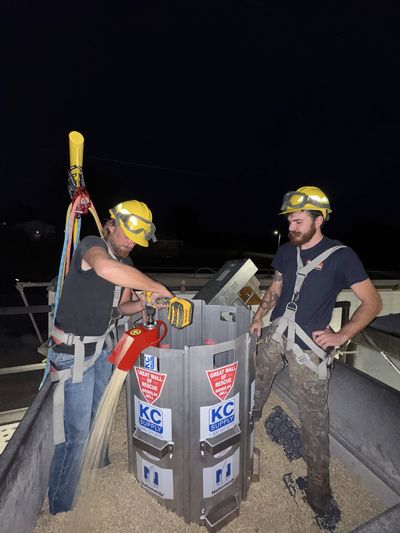
Nemaha Rural Fire Department Training
Training That Prepares Rescuers for Real Conditions
A grain bin rescue requires much more than a tube. Responders need harnesses, atmospheric monitors, rope systems, communication gear and at least two trained rescuers inside the bin. To prepare crews, Nationwide partners with the National Education Center for Agricultural Safety (NECAS) and its mobile grain entrapment simulator. Firefighters are safely submerged to their waist in real grain and taught how to rescue one another.
“Giving someone a grain rescue tube without training is like handing them a chainsaw and never teaching them how to start it,” Hommer said. “We stay until every firefighter has had a hands-on rotation. That’s how to keep those who are entrapped and the rescuers safe.” He also emphasized prevention. “Grain that goes out of condition is the top reason people end up inside a bin,” Hommer said. “Keeping grain in condition—and staying out of the bin—is the best way to avoid entrapment.”
Grain Bin Safety Starts with Prevention
- Monitor moisture and temperature regularly
- Sample grain often for early signs of spoilage
- Keep equipment maintained and functioning properly
- Adopt a zero-entry mindset whenever possible
- If entry is unavoidable, never enter alone