

The U.S. Soybean Export Council (USSEC) convened in the Pacific Northwest (PNW) in November for a mission bringing together more than 125 U.S. soybean farmers, regional exporters and processors, and soy buyers from key growth markets in Northeast, South and Southeast Asia. Including representatives from the Nebraska Soybean Board, the group spent four days networking, learning about the U.S. Soy Advantage in value and quality, and hearing how significant investments in rail, processing and port infrastructure have positioned the PNW as a key strategic export gateway for Pacific Rim destinations.
Nebraska Farmer Speaks to Generational Farming, Legacy and the Future
Nebraska Soybean Board chairman Mark Caspers sat on a grower leader panel during the mission, sharing with a roomful of potential new international soybean buyers about the importance of infrastructure connecting Nebraska with PNW port destinations and his commitment to sustainability and passing on a strong agricultural legacy. “From Nebraska, there's a lot of the rail coming out this way (the PNW).” Caspers said. “I talked to a grower last night that sits on the Nebraska Soybean Board with me. He's fairly close to Hastings, Nebraska, and the AGP facility. He said he had the best yields that he’s ever had, and I think that pretty well carries out through Nebraska.”
Mission Connects Farm to Port
Already the second largest export gateway for U.S. Soy after the U.S. Gulf, the PNW represents new diversification for U.S. Soy exports in key growth markets across the Pacific Ocean, including regions like Vietnam, Thailand and Bangladesh. In 2024, 21% of the U.S. soybeans and soybean meal exports were moved through the PNW's 10 regional ports located in Washington and Oregon states.
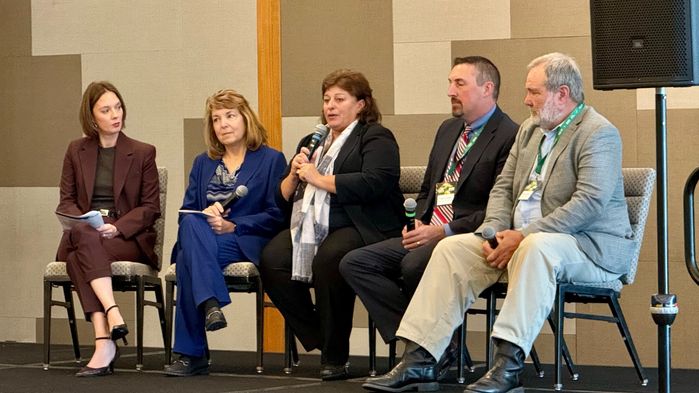
Sessions during the mission included presentations on the extensive infrastructure serving the PNW region, such as a rail system that quickly and reliably transports soy produced in northern states such as Nebraska to port facilities in Oregon and Washington; as well as global market trends and new research quantifying U.S. Soy's significant quality advantages in soybean meal programs.
Caspers was joined at the mission in representing Nebraska’s interests with Wesley Wach, NSB Demand and Utilization Coordinator. “What stuck out to me the most was the smaller setting. It was really nice to be able to ask questions interactively, to talk and build trust in a setting where farmers and international buyers can be in the same room, talking about what’s going on in our industry,” Wach said.
Nebraska's Role in Expanded Soybean Markets
By building confidence in the quality, value, sustainability and reliability of the U.S. Soy supply and infrastructure serving PNW export destinations, USSEC's PNW Exploratory Mission laid the foundation for new capacity and diversified export markets for key U.S. soy-growing regions like Nebraska. As soybean consumption continues to grow globally, Nebraska soy farmers should see a return on this investment with increased demand and higher confidence in U.S. Soy's ability to serve key Pacific Rim export markets. By connecting farmers like Caspers directly with international buyers and showcasing the infrastructure that connects Nebraska farms to global markets, USSEC is helping ensure that Nebraska soybean farmers remain competitive on the world stage.