

In early December, District 1 Director Anne Meis of Elgin and District 7 Director Doug Saathoff of Trumbull participated in a trade mission to the Philippines. Trade missions provide Nebraska farmers an opportunity to strengthen relationships with international buyers, demonstrate the value of Nebraska soy products, and gain firsthand insight into global market trends. Supported by Nebraska Soybean Board (NSB) checkoff investments, this annual trade mission focuses on promoting Nebraska soybean meal shipped through the Pacific Northwest (PNW).
The Philippines remains a strong market for U.S. soybean meal. In 2024, the country imported 2.47 million metric tons valued at $1.01 billion. Continued growth in the Philippines’ livestock industry, along with expanded soybean crush capacity in Nebraska, amplifies the importance of this trade mission to maintain and expand long-term trade relationships.
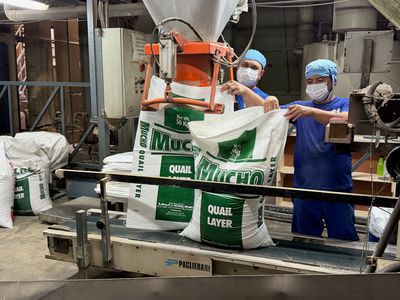
feed mill, which includes U.S. soymeal.
Meis and Saathoff, along with soybean farmers from Iowa, Minnesota, and South Dakota, were advocates of Midwest soy and focused on strengthening business relationships with key customers. Representatives from Ag Processing Inc. (AGP) also participated in the trade mission. AGP operates soybean crush facilities in Hastings and David City, which together ship approximately 20 unit trains monthly, equivalent to 10 million bushels of soybeans to the company’s export terminal in Aberdeen, Washington, destined for Southeast Asia.
The import cycle of the supply chain begins at a marine terminal, where vessels of soymeal from the U.S. arrive and are discharged. The NSB directors visited the Port of Subic Bay – NSD Marine Terminal, which is one of the busiest, largest, historical, and most important ports in the Philippines. The port handles around one million metric tons of soymeal imported into the Philippines each year. Most bulk-imported soymeal is bagged at the port, and during the visit, the directors witnessed the bagging process of U.S. soymeal and the loading for delivery to a customer. On average, the terminal can load 800 bags, each weighing 110 pounds, onto a single truck in just 45 minutes. Meis said, “It is valuable to understand the full journey of a soybean—from our farms to crushing facilities, then by rail to the Pacific Northwest and onto ships overseas. Seeing the large vessels, warehouses, and the unloading and bagging process brought the entire system full circle.”
The directors toured a feed mill owned by UNACHO, Inc., which produces feed for swine, poultry, game fowl, and the aquaculture sector. The U.S. soymeal from the PNW is transported from Subic port in bags to the facility. While touring the feed mill, they saw feed being produced, which included Nebraska soybean meal. Reflecting on the visit, Saathoff said, “It’s special to see soybean meal—likely from Hastings—being used halfway across the world in the Philippines. We plant the soybeans, nurture them through the growing season, harvest them, and deliver them to the plant, often without knowing where they ultimately end up. This trade mission completed the circle by allowing us to see firsthand how U.S. soybeans are being used.”
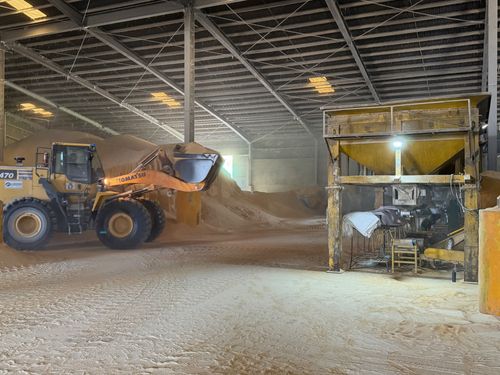
a bin for loading 50kg bags for delivery to customers.
Throughout their weeklong visit, NSB directors also engaged in various meetings with customers. These meetings provided customers with updates on the harvest from their farms and emphasized the crucial role of the market in Nebraska’s economy. Meis noted, “The Philippines is a critically important market for U.S. soybean meal and will become even more valuable as Nebraska and neighboring states continue to expand soybean crush capacity.”
Nebraska farmers and Philippine buyers share a unique, family-centered connection, as many Philippine buyers operate multi-generational family businesses, much like the 81% of Nebraska’s 44,479 farms that are family- or individually run, according to the 2024 Nebraska census. This shared foundation has strengthened relationships for more than a decade, with the Nebraska Soybean Board leveraging soybean checkoff investments to host delegations of Philippine buyers on Nebraska farms during harvest, allowing them to experience firsthand the family-driven values, production practices, and quality standards behind U.S. agriculture. These checkoff-supported trade missions are a strategic investment in market development, helping build trust with key international customers, differentiate Nebraska soy in a competitive global marketplace, and reinforce the reliability of the U.S. supply chain. By connecting buyers directly with the farmers who grow their soybeans, these efforts help secure long-term market access, create opportunities to add value to Nebraska’s production, and position the state’s soy sector for sustained growth and global competitiveness.