
As the demand for domestic feedstocks grows, paired with uncertainty in foreign policy, many wonder if anything is happening at all in the realm of exports. It might not seem so, but reality says yes.
While trade as we know it is not going away, it certainly is changing. That optimism comes from Jim Sutter, CEO of the U.S. Soybean Export Council (USSEC) as he opened at their premier event, Soy Connext, also known as the Global U.S. Soy Summit. It is here where U.S. Soy buyers, sellers, growers and industry partners gather every year, creating an environment that builds relationships—a backbone of trade. Against a backdrop of changing trade dynamics and increasing global demand for reliable, high-quality soy protein and oil, the 2025 event gathered more than 700 attendees from 59 countries in Washington, D.C., from August 20 to 22. The Nebraska Soybean Board (NSB) was a sponsor of this event, with numerous staff and growers in attendance.
“About 50% of Nebraska’s soybeans get exported, including some of mine that get crushed locally and exported as soybean meal through the Pacific Northwest,” says Victor Bohuslavsky, who farms near Seward, serves as a director on the United Soybean Board and attended Soy Connext. “We sell into a global market, and events like Soy Connext help us play in that sandbox.”
Opportunities to connect face-to-face with others around the world make the event stand out. Attendees got a real-time crop update from a farmer panel during the program. Plus, the “Ask a Farmer” lounge made it easy for customers to meet face-to-face with U.S. Soy farmers.
“I visited with a marketer from Pakistan who understands the quality of U.S. Soy,” Bohuslavsky says. “He has had poor experiences with soy from other origins and wants to buy our soybeans.”
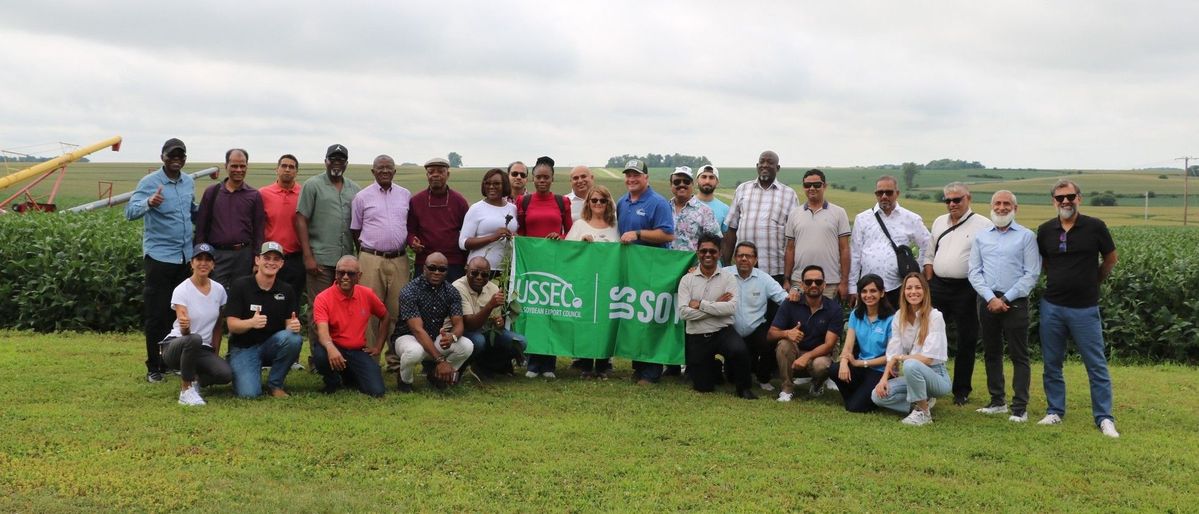
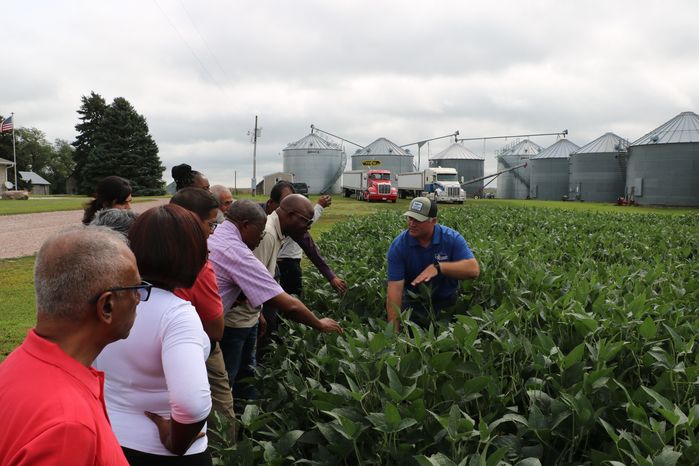
The Trade Team Invitational at the event connected 315 key buyers and 43 exporter companies to strengthen trade relationships and explore market opportunities. To complement this time in Washington, D.C., many international attendees participated in trade team tours before or after the conference. One of these groups visited NSB District 2 Director Jason Penke at his farm near Oakland, NE. Participants were from Nepal, Nigeria, Pakistan and Sri Lanka.
The visit highlighted the U.S. soybean industry’s transparency and readiness to meet global demand, giving international buyers a firsthand look at the sustainable practices, innovation and stewardship that are core to the U.S. Soy value proposition.
“People buy from people; they trust people,” Bohuslavsky says.
Relational trust is one thing, but price and market certainty are another. There is optimism with trade, but skepticism is also prevalent. Just a few blocks away from Soy Connext, at the White House, global tariffs have been brought to the front of everyone’s minds. One country in particular, China, has yet to purchase soybeans for the upcoming marketing year.
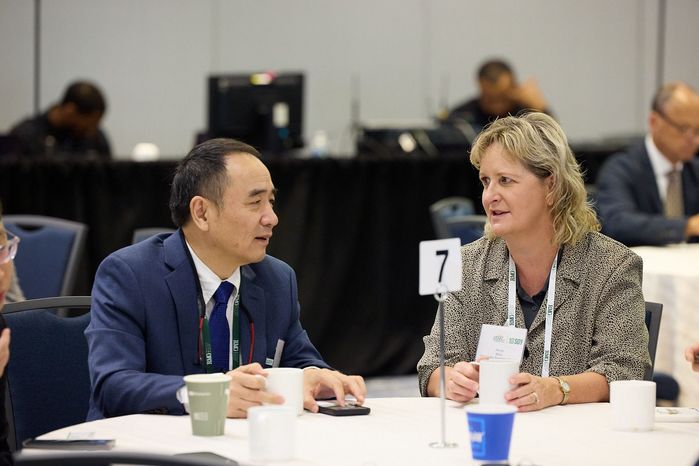
Nebraska farmer and NSB District 1 Director Anne Meis participated in a private breakfast session with the Chinese Soy Connext delegation, focusing on the historic and enduring role of U.S.-China soy trade. At the end of the day though, price has the final say.
In the 2023/24 market year, U.S. Soy exports to the Greater China Region represented 23% of the U.S. Soy market share and was the #1 export market. Soybeans are also America’s top agricultural export, contributing $31.2 billion to the U.S. economy in the 2023- 24 marketing year and traded in more than 80 countries, according to USDA. Year over year, the USDA also projects a 4.3% year-over-year increase in global soybean demand.
What do the signals point to, though? Besides China, what about demand elsewhere?
U.S. soybean export demand is not bad at all elsewhere. Actually, the numbers say it is quite good. According to the USDA, new-crop bean sales to all known destinations at the end of August are the highest they have been since 2018. While this will not fully replace China's demand, it is a silver lining.
Regardless, the U.S. will continue to be one of the pivotal and best sources of soybeans. Checkoff investments will also continue to focus on foreign markets. Relationships with international customers built over decades of collaboration are key to a profitable and reliable soy industry.
Many are wondering what trade will look like in the coming year. Good? Bad? The answer is probably somewhere in between.