

Over the past two years, Nebraska’s soil health movement has gained powerful momentum, thanks in part to the organization and leadership of the UNL Soil Health Team. Led by Carolina (Caro) Córdova, PhD, and Katja Koehler-Cole, PhD, with statewide support from dedicated extension educators, the team delivered 10 impactful educational events—including five soil health conferences, three field days, and two soil health assessment trainings—reaching producers in Ithaca, West Point, Hastings, Lincoln, Valentine, and Scottsbluff. This effort was made possible through the combined support of the Nebraska Soybean Board, SARE, and Nebraska Extension.
More than 700 attendees—including soybean growers, ranchers, consultants, agency staff, and students—participated in these events, with producers and consultants influencing practices on over 12 million acres statewide. Together, these efforts are driving real change. Survey results show 75% of producers now plan to “expand or modify” core soil health practices such as cover cropping, reduced tillage, and crop-livestock integration.
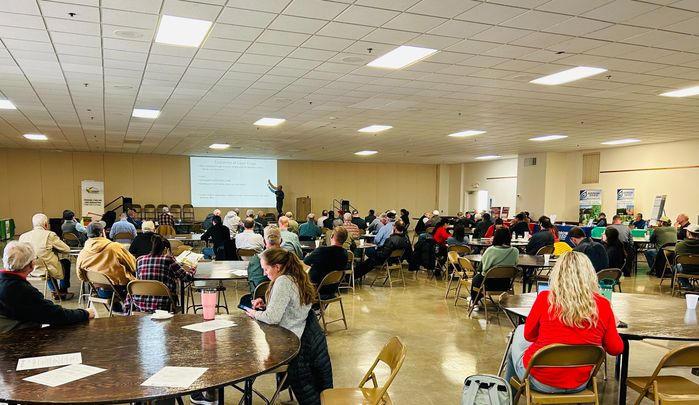
Farmers valued the opportunity for peer-to-peer learning and practical, hands-on demonstrations, often citing the importance of region-specific information. As one producer put it: “The more growth, the better. I appreciated the built-in time to the program for networking—experiences from other growers and carbon intensity scoring were highlights.” Another participant shared, “I have learned that cover crops are a good thing and should be incorporated into our routine. Building and retaining topsoil—it’s essential for the future of my farm.”
Across all events, participants consistently rated the programming as “one of the best” educational opportunities and valued their new knowledge at $10–$25 per acre—with some reporting even greater economic and agronomic returns. Many praised the diversity of panelists and interactive fieldwork: “Great job, good variety of topics. Enjoyed the soil health rapid assessments, networking with soil health enthusiasts and experts,” wrote one attendee. Another added, “I will use this knowledge to promote soil health activities to protect our groundwater from nitrates ... solid information that helps drive real change.”
Looking ahead, Nebraska producers are calling for continued hands-on learning, producer-led panels, and more research tailored to western and central Nebraska. With the continued partnership between the Nebraska Soybean Board, UNL Soil Health Team, and producers statewide, innovation and soil resiliency remain strong in Nebraska’s soybean fields for this generation—and the next.