

Soybeans are finding new purpose in unexpected places, including fighting fires. Earlier this May, the Nebraska Soybean Board (NSB), took part in the Nebraska State Fire School expo in Grand Island to showcase SoyFoam TF 1122, a soy-based firefighting foam developed by Cross Plains Solutions.
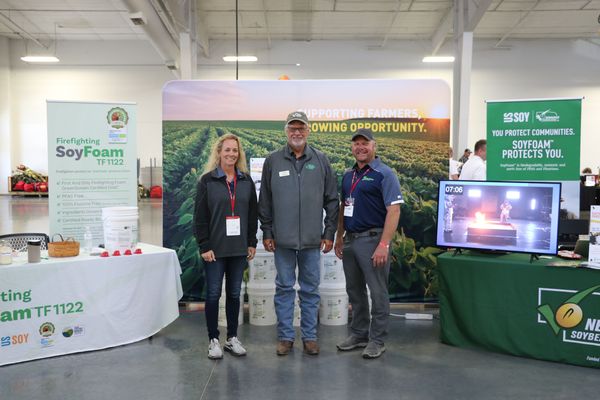
Greg Greving (middle) at the Nebraska State Fire School expo in Grand Island.
The event brought together hundreds of firefighters from across Nebraska, many of whom serve on volunteer departments in rural communities. For NSB, the expo was a unique opportunity to connect with departments, large and small, and discuss how soy is powering safer, smarter solutions.
Greg Greving, a United Soybean Board farmer-leader from Chapman, praised the innovation behind the foam.
“We’re proud to be part of an effort that uses soybeans in an incredible way, and gives back to the very communities where soybeans are grown,” Greving said.
He added, “It was encouraging to see so much interest, especially knowing that 90 percent of Nebraska’s fire departments are volunteer-based and often include
farmers. It was a good way to show how soybean checkoff dollars are being invested back into rural communities.”
At the expo, NSB gave away 15 sample pails of the foam through an entry process to departments across the state, including Blair, Broken Bow, Chapman, Dakota City, Elwood, Fort Calhoun, Giltner, Hastings, Hershey, Kearney, McCool Junction, Ralston, Randolph, Valparaiso and Wymore.
A Safer, Smarter Foam
SoyFoam TF 1122 is made from soy meal through soy flour, a product of the soybean crush process. The foam is 84 percent biobased and is certified under the U.S. Department of Agriculture’s BioPreferred program. It works with standard firefighting equipment and extinguishes Class A fires, such as wood and paper, and Class B fires, including fuel and oil.
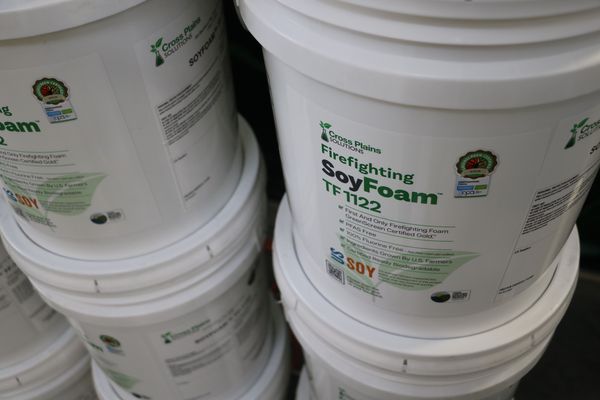
soy's potential as a safer, sustainable firefighting solution.
What sets the product apart is what it does not contain. Traditional foams often rely on per- and polyfluoroalkyl substances or PFAS. These are known as “forever chemicals” because they do not break down in the environment. PFAS exposure has been linked to serious health issues, including cancer, liver disease and developmental problems. So, mitigating forever chemicals through soy-based products can create real impact, for the safety of our first responders and to maintain the integrity of our local communities’ soil health, air quality and drinking water.
“With support from NSB, we had the chance to engage firefighters across Nebraska and explain how soybeans can help put out fires while keeping first responders and our communities safe,” said Dave Garlie, chief technology officer for Cross Plains Solutions.
He added, “First responders face a 72 percent higher risk of cancer than the general population due to chemicals like PFAS in their work environment.”
SoyFoam is the only firefighting foam in the world to earn GreenScreen Certified GOLD status, which recognizes safer chemical formulations. The foam also meets the National Fire Protection Association’s standard for wetting agents, known as NFPA 18.
Garlie explained that the foam has already demonstrated effective vapor suppression across multiple fuels and is designed to seamlessly integrate with current foam nozzles, inductors and pump pressures, requiring no adjustments to a fire department’s existing standard operating procedures.
"The fact that the departments can use this with their current setup makes adoption easier and more cost-effective," Garlie said. "We've seen strong interest from departments that want to be proactive about safety without compromising performance."
The soy checkoff has long supported research into new uses for soy, and SoyFoam is a strong example of those efforts in action. As the soy industry looks for new ways to add value to the crop, products like SoyFoam provide market opportunity and real solutions that touch lives across the state.
Click here for more information about SoyFoam and where to get it!