


This 13-state collaboration, supported by checkoff funds, focuses on advancing soybean productivity, profitability and sustainability through farmer-focused research and outreach. An Iowa native, Anderson holds a bachelor’s degree in agricultural biochemistry from Iowa State University and a doctorate in molecular plant virology and plant pathology from the University of Missouri. He has spent much of his career leading research initiatives that address real-world challenges for soybean farmers.
Through the NCSRP, Anderson works closely with state soybean organizations, including the Nebraska Soybean Board, to fund and coordinate cutting-edge research on disease resistance, pest management, soil health and agronomic practices. His leadership helps ensure that research dollars translate into practical solutions for farmers, strengthening the future of soybean production across the 13 states that represent nearly 355,000 soybean farmers.
Nebraska Soybean Board (NSB): How does the North Central Soybean Research Program (NCSRP) work, and how is Nebraska represented in this
collaboration?
Ed Anderson (EA): The North Central Soybean Research Program (NCSRP) is a 13-state Midwest-based regional soybean checkoff research collaborative dedicated to advancing basic and applied soybean research. Its mission focuses on improving soybean yield potential (genetic gain) and yield protection from weeds, insects, diseases and abiotic stressors. Through research, teaching, Extension and outreach, NCSRP helps farmers produce higher-yielding, higher-quality, more profitable and more sustainable soybeans. Founded in 1992 by a small group of states, NCSRP has expanded to formally include 13 member states: IA, IL, IN, ND, SD, NE, KS, MO, MN, MI, WI, OH and PA. It also maintains strong partnerships with other soybean-producing states, regions and the United Soybean Board. For many years, the Nebraska Soybean Board and Nebraska soybean farmers have been active contributors to NCSRP, recognizing the value of regional research and Extension efforts with broad benefits. Nebraska has a farmer serving on the NCSRP board and provides research and technical staff support, in addition to contributing significant checkoff dollars to research, communications and operations. Researchers, educators and Extension experts at the University of Nebraska–Lincoln have long played a key role in NCSRP-funded projects, driving innovation and progress for soybean farmers across the region.
NSB: What are some of the key challenges that soybean farmers in the Midwest are currently facing, and how is NCSRP working to address them?
EA: In the various areas of production and supply research, Midwest soybean farmers are focused on yield improvement, enhancing the quality and composition of soybean seed (especially oil and meal) and protecting yields from weeds, insects, diseases and abiotic stressors such as Iron Deficiency Chlorosis (IDC), salinity, temporal flooding, drought and heat. Other priorities include fertility, soil health, optimized fertilization, agronomics and new advances in precision agriculture, scouting, best management practices, modeling, forecasting, risk management and AI-driven technologies to improve decision-making and management practices. While we cannot control soybean prices or the threats of tariffs and trade wars, we can support farmers by prioritizing, funding, monitoring and reporting on the best, most collaborative, and highest-impact research. Key areas of focus include breeding for genetic gain and quality, developing new technologies and tools for disease-resistant genes and other beneficial traits, and increasing awareness and management strategies for soybean cyst nematode (SCN). Additional efforts target soybean gall midge, aphids, stink bugs, Dectes stem borer and other insect pests through biology studies and integrated management solutions. Research also includes weed studies, herbicide resistant weed surveys and the development and validation of integrated management solutions. Agronomic research helps to survey, develop, test and communicate improved best management practices for production, profitability and sustainability. Studies on soilborne and foliar disease biology focus on infection cycles and management strategies while ongoing innovations explore new technologies and tools for long-term advancements.
NSB: How does the NCSRP prioritize and select research proposals, and what criteria are used to determine which projects are the most beneficial for farmers?
EA: The NCSRP has a tradition, mission, vision and a set of actionable goals and objectives. As described in the NCSRP Research Portfolio document on the ncsrp. com website, it also has an established process for listening to farmers, staff, industry experts and researchers to identify high-priority, ongoing research and Extension needs. This includes setting funding strategies for each research area. Furthermore, the NCSRP has a long-standing commitment to funding larger, more holistic research programs rather than smaller, potentially redundant or overlapping projects. This approach allows for tackling bigger, more complex challenges and opportunities in an efficient and effective manner.
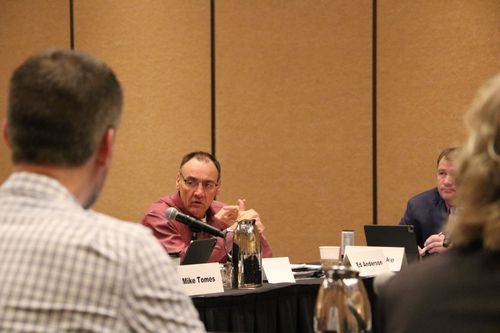
EA: NCSRP-funded research continues to drive advancements in soybean production by improving the management of key challenges and enhancing breeding efficiency. Notable progress includes better awareness and management of SCN, stress tolerance research focused on soilborne and foliar fungal pathogens and predictive modeling tools like Sporecaster. Cutting-edge breeding methods leverage germplasm, advanced technologies and modeling to accelerate genetic gain and enhance beneficial traits. Researchers are also developing integrated tools for weed, insect and disease management, including scouting and decision-making tools for pests like soybean gall midge, which is a major concern in Nebraska. Additionally, improved agronomic practices and production management strategies are being refined and promoted through collaborations with farmer-friendly groups such as GROW, Science for Success and the Crop Protection Network.
NSB: How is NCSRP advancing management strategies for SCN and other pests?
EA: NCSRP supports research through the SCN Coalition, which explores how nematodes infect and infest soybeans while developing novel strategies to minimize their impact. Efforts focus on improving detection, resistance breeding and management tactics to help farmers combat SCN and other key pests like soybean gall midge.
NSB: How is NCSRP research improving precision weed management and herbicide efficiency?
EA: Researchers are evaluating innovative approaches such as prescription and precision spraying, mechanical control methods like electrocution and seed harvest destruction, and best practices for herbicide application. These studies also explore crop rotations and integrated management solutions to enhance weed control while maintaining long-term sustainability.
NSB: How does NCSRP balance immediate agronomic needs with long term soybean research goals?
EA: NCSRP takes a strategic approach by developing, vetting and continuously updating its research portfolio. Projects are carefully reviewed to ensure they provide practical solutions for today’s farmers and long-term advancements in soybean genetics, pest management and production systems. Publicly available documents outline these priorities to maintain transparency and accountability.