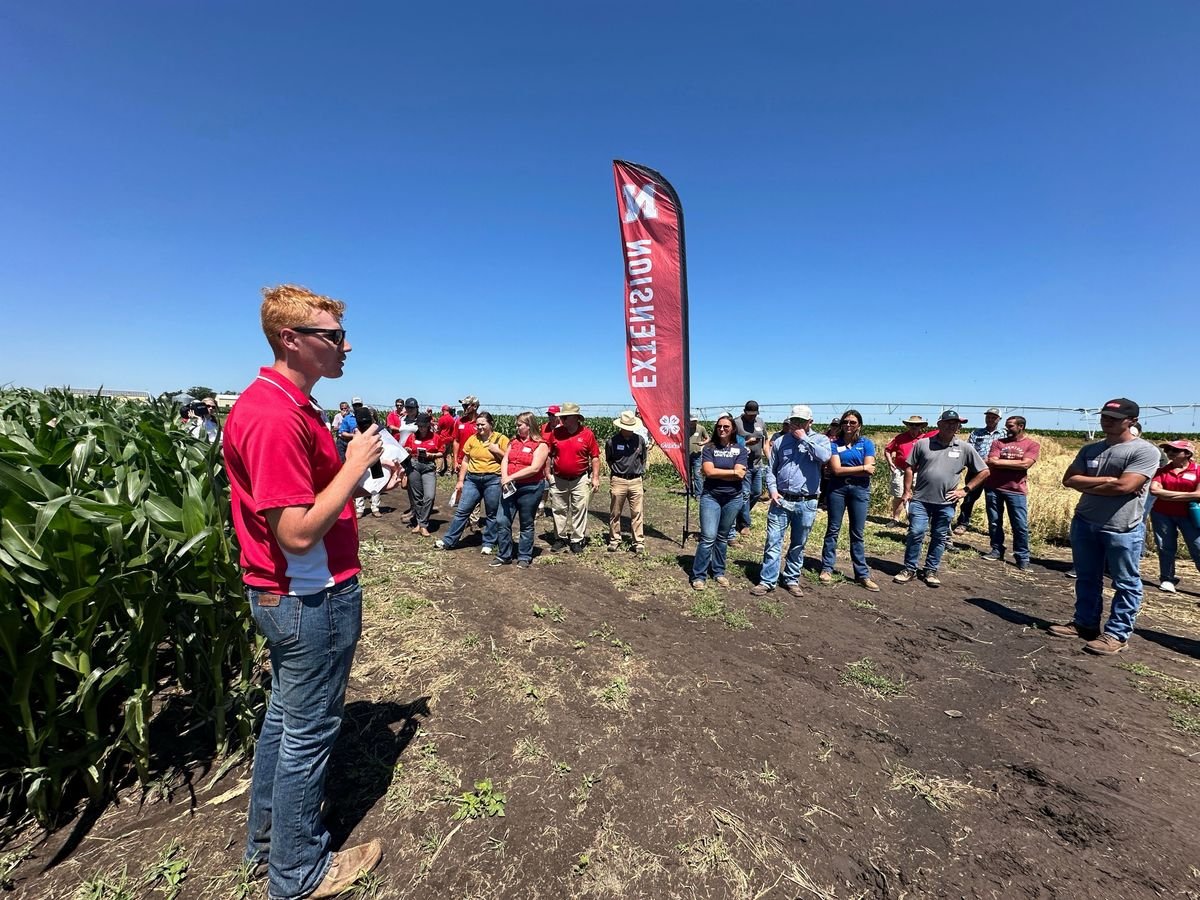

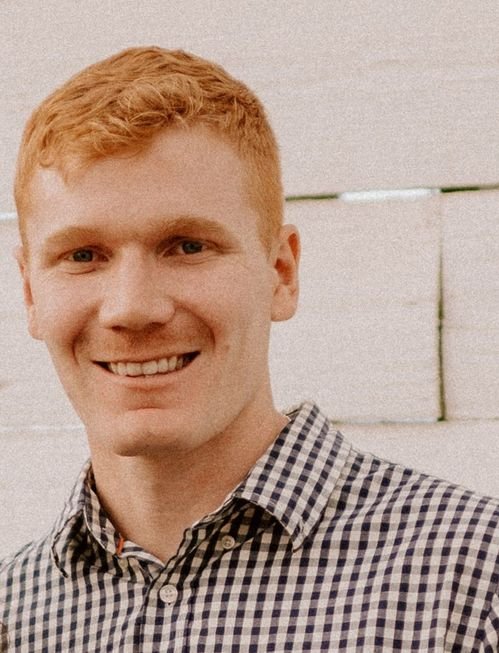
We recently caught up with Adam Leise, newly appointed Director for the Nebraska On-Farm Research Network (NOFRN), to discuss his new role and NOFRN’s mission to work with producers on critical production, profitability and natural resource questions.
Raised on a farm and ranch in Hartington, NE, Leise developed a love for being outdoors and in the field. After graduating from Cedar Catholic High School, he pursued a degree in Ag Economics from the University of Nebraska-Lincoln. Following two years of Catholic mission work in Maryland, he returned to Nebraska to pursue a master's in agronomy under the supervision of Dr. Amit Jhala, graduating in 2024 with a thesis on innovative See & Spray™ weed technology.
Today, Leise says he’s thrilled to be working with NOFRN, where he has the opportunity to meet and collaborate with Nebraska producers.
“NOFRN works directly with farmers to help them achieve their short- and long-term goals,” he said. “That could be anything from improving yields to increasing soil organic matter to preserving the land for future generations.”
“We aim to find where profitability and sustainability intersect,” he continued, explaining that it happens by working side-by-side with producers to conduct research trials, interpret results and apply what has already been learned in the field. “When we work together, we can address challenges and push the industry forward.”
On a daily basis, Leise has the chance to meet with many different growers and help them pursue their unique goals. “I believe that understanding what works best for each farmer on their own farm is crucial. Every farm is different—there is no silver bullet.” He also enjoys working with members of Nebraska Extension and the agricultural research community. “We aim to provide tangible results that can be put to use in the field. We also help farmers answer questions and make informed decisions that will benefit their operation.”
When asked about his advice for growers today, Leise noted that farming is an ever-evolving industry. “The techniques we use today are different than they were 50 years ago, and the way we farm in 50 years will likely be different from what we’re doing now,” he said.
He believes one of the keys is to keep asking questions and continually striving to improve. “I think every farmer today has the opportunity to strive to be better. I encourage every producer to strive for increased yields and profitability on their own acres.”
“Part of our role at NOFRN,” he continued, “is to motivate farmers to conduct research on their own farms and test methods, products and systems with the machinery available to them.”
Leise says that what motivates him the most in his collaborative work with farmers is being part of positive change. For example, seeing a farmer adopt a new method that increases soil organic matter or embracing regenerative crop practices that will allow for higher yields in future generations. “I’m also passionate about efficiency—the details that maximize profit per acre and being diligent with our acres. Being smarter about the nutrients and chemicals we’re putting into the ground. More acres isn’t necessarily the answer. It’s often about being smarter with the acres we have.”
He says Nebraska's agricultural diversity is one of its greatest strengths. “We have farmers who are knowledgeable about many different things and diverse cropping systems as well. This diversity allows us to learn from each other and adapt best practices to our unique situations. It's our job at NOFRN to help each farmer identify what works best for them on their own farm.”
Ultimately, Leise says his role at NOFRN is about helping producers make progress today while paving the way for tomorrow.
“Continuous learning and research are a big part of our industry’s future. The way we farm is constantly changing and it's crucial that we stay ahead of the curve. That's why at NOFRN, we encourage farmers to conduct research on their farms and test new methods, products and systems. We're here to provide the support and resources they need to make that possible.”