

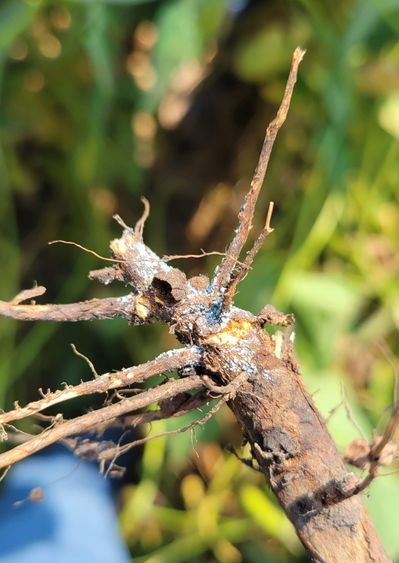
In some cases, this blue growth is not present or
appears gray. Source: Dylan Mangel
A wet spring is always welcome, but in 2025, it came with a cost. Excess moisture created ideal conditions for the pathogens that rot soybean roots, particularly the one that causes soybean sudden death syndrome (SDS). Soybean plants are most vulnerable to disease during germination, when they rely on limited energy reserves and have less to contribute to pest defense. Extended rains after planting left soils saturated across much of Nebraska, providing the perfect environment for SDS to establish and spread.
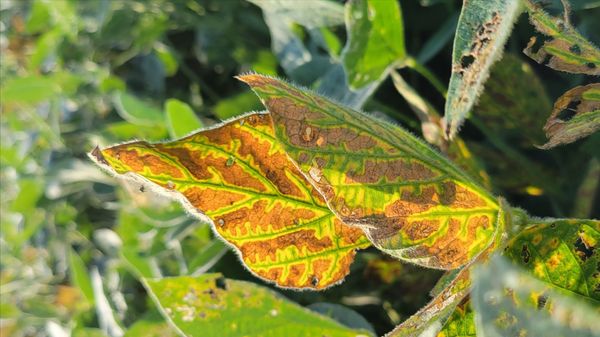
These developing plants encountered the pathogen (Fusarium virguliforme) where it survived in the soil on previous crop residue. This pathogen prefers high soil moisture and compaction, which are both conditions that might slow the emerging seedling. Around this time, the fungus infected the seedlings and remained, spreading slowly within the root tissue for the entirety of the infection. The fungus never moved up to the leaves, despite causing foliar symptoms. This foliar damage came exclusively from fungal toxins that moved upward to the top of the plant. Overall, this combined stress reduced yield by reducing root uptake of water and nutrients and limiting the leaves’ ability to capture sunlight. Additionally, fields with soybean cyst nematode were prone to increased sudden death syndrome damage (request free soil testing here: go.unl.edu/scnsample).
All this being said, soybeans hold up in cool, wet soils better than corn. With earlier planting dates becoming more common, this ability gives growers a chance to push higher yields, but also raises the stakes for variety selection and seed treatment planning. As you review the 2025 season, take time to study your notes and field observations. Use those insights to guide decisions about variety selection, seed treatments and soil testing so that disease management investments are made where they are most likely to deliver the greatest return.
|
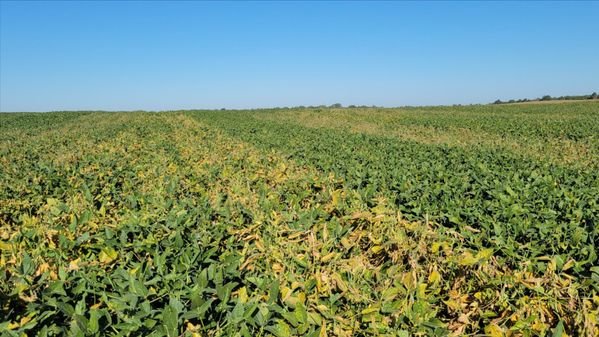
of a tolerant variety planted between two susceptible varieties. Source: Dylan Mangel |