
Nebraska Soybean Board (NSB): How did Airable Research Lab get its start?
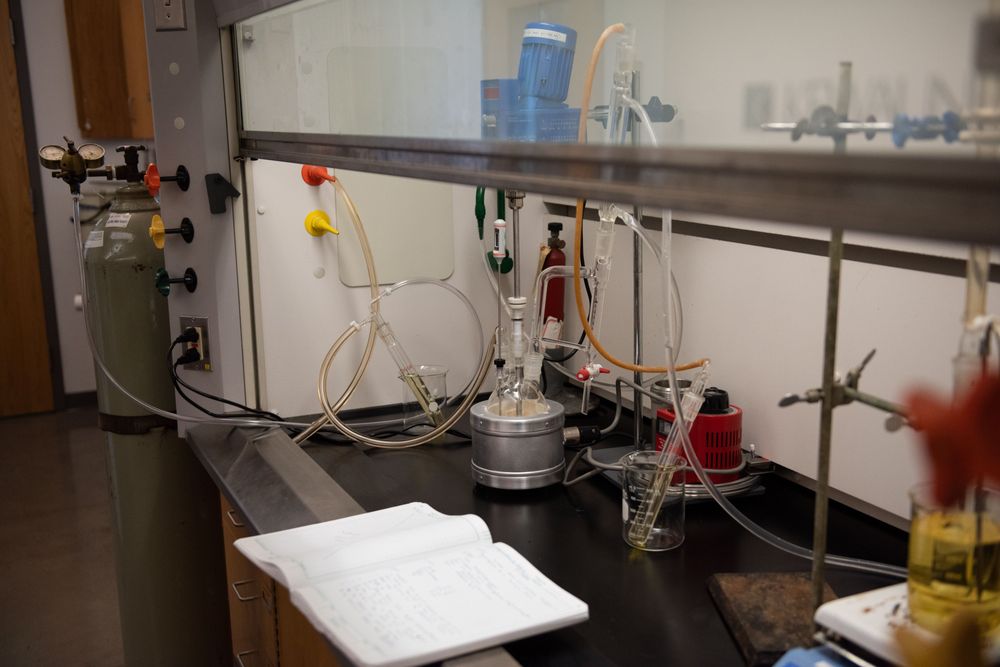
Barry McGraw (BM): In 2018, I had an idea. I cold-called multiple universities and landed at Ohio Wesleyan University, as they were open to the idea of renting lab space. I started out renting one lab and began developing a plan to expand this idea into an Ohio Soybean Council (OSC) business lab. OSC calculated the money spent funding external projects and compared it to the cost of conducting our own research and commercialization. We evaluated the other benefits as well, such as maintaining IP and working directly with commercial companies to develop the products they need (vs. guessing what consumers or industry wants). OSC decided to go forward, and in 2019, signed a three-year lease for three labs at Ohio Wesleyan and brought in a few contractors and consultants to help us get started. In 2021, we formed an Airable board, and since the lab was seeing early success, we decided to make a full launch. We now have 12 full-time scientists and three parttime employees and have developed over 12 new products.
NSB: What sparked your interest in developing new uses for soybeans?
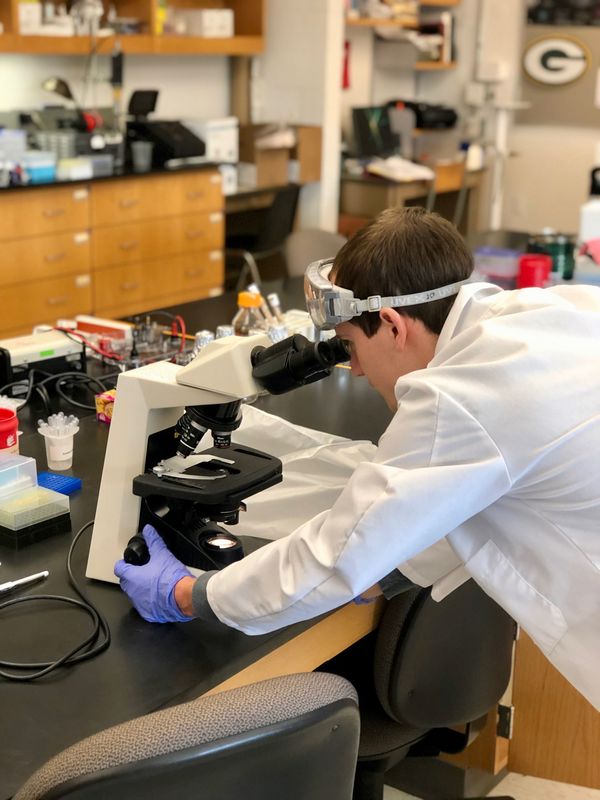
BM: The primary reason I jumped into soy biobased product research and development is the challenge of utilizing soybean oil, meal and byproducts to replace petroleum products, creating biobased products that are economical, technically feasible and scalable. Later, the reward and motivation of working for and with very entrepreneurial-thinking soybean farmers became just as important.
NSB: Can you share some of the most promising or large-scale applications for soybeans your lab is currently exploring that could truly help move the pile?
BM: We’re increasing our focus on polymers or bioplastics. There’s a strong market for that; around 430 million metric tons of plastic are produced annually worldwide, and plastic waste is becoming a real issue. And most of the products will likely be profitable. What’s particularly exciting is the opening of the second Airable location, which will really add to our capabilities in the polymer space. We’re also looking at ways to create demand for meal and hulls—looking beyond soy oil to use the whole bean. Soybeans are roughly 20% oil and 80% meal, and with the rising interest in using soy oil for biofuels, farmers are expecting to have a surplus of meal. So they’re eager to learn what can be done with the meal, beyond animal feed. Less waste, more profit.
NSB: What are the biggest market factors currently driving demand for soy-based products?
BM: The market for biobased products has been decades in the making.
For many of those years, governments have tried to regulate the economy into sustainability, and although that’s not the most efficient or effective approach, it does encourage industry to start making preparations. The government has also invested significant resources into greener products and processes, helping to set the stage for the transition away from substances that are unhealthy for our planet and our people.
But at the end of the day, companies answer to consumers, and consumers are becoming more environmentally conscious and willing to pay a little more for sustainable products. They see the issues with relying on petrochemicals and other feedstocks that have wildly varying availability and
pricing. They’re ready to put their dollars toward greener, cleaner solutions that support the farmers right here at home. And of course, as biobased products enter the market, more consumers become aware of them and their benefits, and it becomes an upward spiral.
In addition, industry understands that the United States has to participate in the global green economy or get left behind. Sustainable practices will soon be key
to remaining competitive on the global stage. So now the private sector is making serious commitments—and investments.
And now that the market is opening up, all those years of preparation are paying off, as technology breakthroughs are making it possible to develop and produce biobased products cost-effectively—products that are just as good as, if not better than, their petroleum-based counterparts.
NSB: What are some of the biggest challenges you face at Airable?
BM: The economics is a challenge. Petroleum is typically less expensive than soy-based starting materials. One of the biggest challenges is functionalizing and/or finding unique properties of a soybased product that bridges this cost gap. For example, soy-based polyurethane (PU) coatings cure slower than petro PU, thus creating a stronger chemistry network that provides a tougher PU coating for wood floors and other applications. A second challenge is building an innovative team that doesn’t get wrapped up with research and the analytical side but is always looking at technology from a consumer and industry perspective. For example, we may have a unique chemistry, but it has to be scalable at a cost reasonable enough that someone would be willing to manufacture the product—and a cost that allows the soy-based product to compete against petrol-based products of a similar nature.
NSB: What makes soy valuable molecule in industrial chemistry that farmers might not know about?
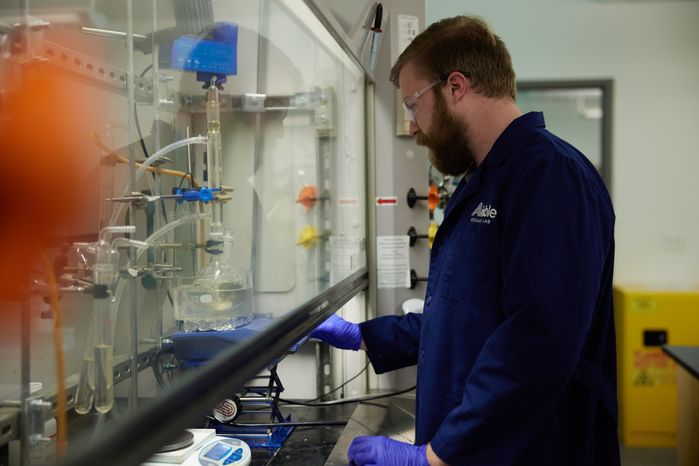
BM: Soybean oil is incredibly versatile. Its molecular structure and fatty acid profile are easily modified for many applications. Soybean oil, in particular (vs. some other natural oils), has fatty acids with double bonds. These provide multiple reactive sites (i.e., the fatty acids react well with other chemistries). The double bonds also lend themselves to key characteristics that are attractive to industry, such as durability. Soybean oil also has a long carbon chain that lends product attributes such as flexibility, strength and hydrophobicity (i.e., moisture resistance).
But the most obvious and impactful differences between soy and petroleum are fairly obvious. Soy creates far fewer CO2 emissions throughout the production lifecycle (both its own and any product in which it is a component—growing soybeans even capture CO2 from the atmosphere). Soy has lower volotile organic compounds (VOCs) and toxic content than many incumbent feedstocks. Soy is entirely safe to handle. It’s locally sourced and abundant, furthering domestic independence and stable supply chains.
NSB: How does Airable typically work with companies to turn soy-based concepts into commercial products?
BM: One of the things that sets Airable apart is our partnerships with commercial and industrial enterprises. A company may come to us with an idea to improve an existing product—or an idea for a new product—and ask whether the idea is feasible. The company reps specify technical targets for the product. If we think we can hit those targets, we do the research at no upfront cost to the company, as long as they commit to evaluating the samples we send them. They provide us with feedback, and we adjust the formulation in response to that feedback, and we go back and forth until we develop a product that meets their specifications. The next phase is development, which involves scaling up the product for field trials. If field trials go well, the company licenses the formulation, and the product
enters the market. The whole process, from concept to commercialization, can take anywhere from nine to 24 months.
The benefit is that we’re not doing research for the sake of doing research. When Airable partners with a company, that partner has already identified market demand—or some company requirement—for a specific biobased product or feedstock. The company has already established commercialization pathways, most
of which are quite effective. So we’re not reinventing the wheel. If we develop a product for a big company like DeWALT, it will probably sell.
NSB: What opportunities do you see for Nebraska soybean farmers to benefit from your research?
BM: The benefits of soy-based product R&D are evident. Developing new soybased products and feedstocks leads to new markets for the farmers’ harvest and
increases demand for soybeans.
As OSC realized when we founded Airable in 2019, using checkoff funds to sponsor a few soy R&D projects here and there doesn’t really have much of an impact. By having a dedicated soy lab, the whole process is accelerated, and far more products enter the market. More products, more demand for soybeans. And since Airable works directly with commercial companies, the products are more likely to sell. For instance, Airable provided the formulation for DeWALT bar and chain oil, which is available and selling well on Amazon and in 1,500 Home Depot stores nationwide, as well as other online platforms and brick-and-mortar locations. In its inaugural year, we project that single product will generate a demand of 55,000 bushels.
In addition, the work Airable does increases soy’s value. Soybean oil that is used for biodiesel or even cooking oil delivers a significantly lower profit than the same amount of soybean oil in a bottle of bar and chain oil that sells for over $10.